Four years ago, a Pennsylvania man was charged with running a heroin ring out of a halfway house where he was serving parole. Gene “Shorty” Carter of Philadelphia was promptly tried and convicted.
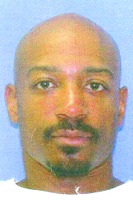 A Blair County trial judge then sentenced him on 16 separate counts, each carrying a mandatory minimum sentence, and ruled that the terms would run consecutively. The net result: a sentence of between 105 and 216 years in prison, all on a non-violent drug conviction.
Carter’s case is just the latest example of the excesses of the criminal justice system. A major movement is underway to reform the way courts penalize drug users and overturn the kinds of laws that made Carter’s sentence possible.
Case sent for new sentencing
In the meantime, a Pennsylvania appellate court overturned Carter’s sentence in September, saying the 43-year-old man deserves a less excessive penalty. The appellate judges returned the case to the trial court for new sentencing rather than shorten his current sentence themselves.
But they did rebuke the trial judge for imposing the mandatory sentence without input from a jury, and called his sentence “manifestly unreasonable and excessive.” The judges pointed to a 2013 Supreme Court decision holding that juries, not judges, must have the final say in whether mandatory sentences apply.
Discriminate anti-drug laws
Carter’s case highlights the draconian means by which anti-drug laws can be used to doom poor people, especially poor black people, to a lifetime behind bars over relatively minor drug crimes that don’t involve violence.
Mandatory minimum sentencing laws were a product of the drug war during the late 1980s and 1990s. They were typically written on the theory that drugs are the driving factor behind all crime (they’re not), and they sought to lock up even small-time street dealers for decades at a time.
A similar case recently unfolded in Missouri, where Jeff Mizanskey was convicted in 1993 of trying to sell six pounds of marijuana to an undercover police officer. It was his third drug conviction, the state had a “three strikes” law, and the judge handed down a life sentence – over a few small, nonviolent cannabis sales.
Mizanskey finally freed
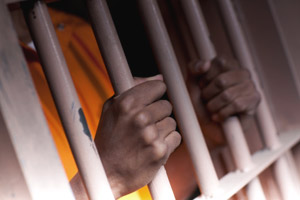 Mizanskey was finally freed last month, after Missouri Gov. Jay Nixon commuted his sentence. He was paroled after roughly 20 years behind bars.
But there are still plenty of other low-level offenders serving massively out-sized sentences for marijuana crimes. The war on drugs has left a wake of lives ruined by overzealous arrest, overzealous prosecution, and overzealous sentencing.
The pendulum is swinging in the right direction again, after a long time. But it still has a long way to go before our prisons are no longer crowded with young black men doing time for offenses that soon may not even be against the law.
Court Overturns Massive Drug Sentence

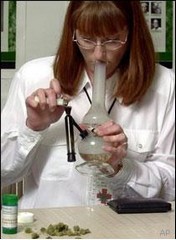 But there’s another group of people whose right to use even
 Sadly, there isn’t much data to determine exactly how cannabis affects medical competence. The drug can interfere with certain cognitive functions and can sometimes cause tremors, among other potential problems for a practicing physician.
 The study, published in the journal Pediatrics, found that
 Researchers also complained that there isn’t yet enough evidence to support vaping as a healthy alternative to smoking. Actually, a study released just days earlier found that
 But there isn’t much they can do. Indian reservations interact with the U.S. government through formal treaties and fall outside the jurisdiction of the states.
 The Medical Board of California formally accused Dr. Gunjan Goel, a surgeon at the University of California San Diego, of practicing medicine
 Goel was not charged with a crime as of early September. Medical misconduct is a professional allegation rather than a criminal charge, so at most, Goel could be fined and stripped of her medical license.
 But what has The Donald actually
 His comments in February at the annual Conservative Political Action Conference may give
 The survey, from the University of Michigan, found
 The real downside to the report is that use of hard drugs is also on a steady climb. Amphetamines, including prescription medications, are increasingly being abused by students cramming for exams.