Tuesday, September 1, 2015

MJ Expos Are Now Big Business

If there’s one thing the marijuana community loves (aside from marijuana), it’s a good trade show. Cannabis expos have exploded in recent years, playing a critical role in political reform and introducing stoners to some of the best products available.


Marijuana ExpoThe big ones are legend: The Cannabis Cup, HempFest, the Emerald Cup, all draw some of the best talent and product in the business. There are major expos almost everywhere that marijuana is legal, with the possible exception of Alaska.


Colorado hosts the premier American event by High Times, the Denver Cannabis Cup. Seattle is home to HempFest. Even in California, where marijuana remains illegal for personal use, large marijuana-oriented gatherings are common up and down the coast.


But there are trade shows that are less well-known to the general public, such as the Cannabis World Congress & Business Exposition in Los Angeles, or the Great Midwest Marijuana Harvest Fest in Wisconsin – where cannabis possession remains a crime. As these festivals grow, more will come.


What t0 expect at a cannabis convention


What’s in store for the average expo-goer? It depends largely on the setting and local laws. At a Cannabis Cup convention in Colorado for example, you’re free to buy and sample product as long as you’re an adult.


It’s a little harder to light up if you’re in California or another state without legalization. There, you usually have to have proof that you’re a medical patient. That’s easy to get, but it does add a layer of hassle to the experience.


Most expos celebrate a particular aspect of the marijuana business. The Cannabis Cup pits the world’s best strains against each other, HempFest is advertised as the world’s biggest outdoor marijuana party, and the Emerald Cup focuses on organically grown cannabis.


Professional networking opportunities at the CWCB


Smoking marijuana at expoOn a smaller scale, the Cannabis World Congress expo is all about green business opportunities and industry networking. It’s geared toward professionals and entrepreneurs, providing classes, exhibits, products, and services on everything from accounting to vaporizers.


Expos are a critical means for cannabis businesses to build cultivation, distribution, and retail networks. The legal marijuana industry is still very young, and the rush of new businesses means a need for large business-oriented gatherings.


Of course, many expos are also an excuse to use cannabis. Rules about where and when attendees can toke vary from festival to festival, and in some places consumption is strictly forbidden at public gatherings.


Expos first started appearing around the United States in larger numbers in the 2000s; there were already strain competitions in the Netherlands, but the adoption of medical marijuana in California in 1996 opened the door for expos here.


The next generation of marijuana festivals will likely come on the East Coast, where at least one state could legalize by next year. The area is mostly bereft of public cannabis events, aside from 420 parties and the like.


In the meantime, legal marijuana providers can find contacts, education, and business advice from the Cannabis World Congress, which meets Sept. 17 and 18, as well as other business-friendly expos.


MJ Expos Are Now Big Business

Thursday, August 27, 2015

Study: Most Anti-MJ Claims Are Bogus

Every opponent of legalization has a favorite argument. Cannabis is a gateway drug. Marijuana is as addictive as cigarettes. Toking makes you less intelligent.


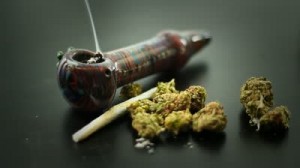
Marijuana Pipe and JointsThese claims are pervasive, and they’ve guided American drug policy for decades. But a new study finds that almost every “scientific” argument against marijuana is bunk.


The International Centre for Science in Drug Policy, a pro-reform research group, released the study in August. They examined several of the most common claims and declared most of them provably false.


Marijuana as a gateway drug


Take, for example, the belief that marijuana is a “gateway” and leads to the use of harder drugs. This point of view, while in retreat, is still popular around the world.


Researchers reviewed the scientific literature and concluded this claim isn’t true. Repeated studies have demonstrated that tokers are more likely than others to try hard drugs, but also that cannabis doesn’t cause the leap; more likely, it’s a factor of personality, environment, and genes.


Indeed, the researchers behind the new report say lawmakers and healthcare providers often confuse correlation with causality. The fact that marijuana users are more likely to try other drugs doesn’t necessarily mean one fact causes the other, only that they have connections at the statistical level.


Marijuana as a cause of schizophrenia


This problem also arises in the argument that cannabis causes schizophrenia, or at least brain adaptations that are similar to schizophrenia. No study has ever proved that marijuana use actually causes psychotic disorders.


“While scientific evidence supports an association between cannabis use and schizophrenia, a causal relationship has not been established,” researchers wrote in the report, titled “State of Evidence: Cannabis Use and Regulation.”


The scientists did determine that there is at least a kernel of truth to some anti-cannabis claims. The contention that the drug is “300 to 400 percent” more potent today than it was 30 years ago, for example, contains some fact: Marijuana really is measurably stronger, though nowhere near as much as the claim suggests.


Interference with cognitive function


Likewise, assertions that cannabis interferes with cognitive function are partially true, the report found. But there is little data to suggest this effect should be especially troubling.


“While the evidence suggests that cannabis use (particularly among youth) likely impacts cognitive function, the evidence to date remains inconsistent regarding the severity, persistence, and reversability of these cognitive effects,” the researchers wrote.


Marijuana use and drug policy


They shot down several other claims regarding marijuana use and drug policy, including:


– Cannabis is as addictive as heroin: In reality, 23 percent of heroin users become addicted to that drug while just 9 percent of marijuana smokers develop a dependence.


– Using marijuana can cause fatal damage to the coronary system: In fact, there is no reliable evidence that cannabis weakens the heart, clogs the arteries, or otherwise damages the circulatory system.


– Toking lowers IQ by as many as 8 points: There is simply no data to support this widespread belief. Some studies have found a mild, temporary dip in IQ among some users when high, but the proof is weak at best, and any such effect quickly wears off.


Marijuana Bud– Marijuana reform will only make the drug easier to get, leading to a greater number of addicts and underage users: Actually, the best studies suggest even full legalization has no effect on how many teens use cannabis.


– Regulation doesn’t cut down on crime: This simply isn’t accurate. Science has conclusively shown that the vast majority of “drug crime” stems not from use of any drug but rather from the criminal enterprise that thrives under prohibition. And current evidence suggests that’s exactly what’s happening, as certain crime rates are in fact dropping in places where cannabis is legal.


– Under legalization, stoned driving will be a major problem: Any state trooper can tell you cannabis isn’t a serious problem on the streets. It’s alcohol you have to worry about. Indeed, studies show driving high is only twice as dangerous as driving sober, while drunk driving is 13 times as risky.


– The legal marijuana industry is rapidly evolving into the next “Big Tobacco”: There really isn’t any evidence to support this claim, though there isn’t much to refute it, either. In any event, states that adopt legalization have the regulatory power to prevent this from happening.


Study: Most Anti-MJ Claims Are Bogus

Court: MJ Doesn"t Smell So Bad, After All

If there’s one marijuana-related fact pretty much everybody seems to agree about, it’s this: The stuff smells something fierce. Love it or hate it, that thick, funky scent of soil and sweet grass is distinct; even children can place it in a matter of seconds.


Man Smelling MarijuanaBut that doesn’t mean everyone feels the same about the reek of cannabis. A state appellate court in Oregon ruled in August that the notorious stench is not “physically offensive” in itself, no matter how some people may feel.

A three-judge panel of the Oregon Court of Appeals declared that the aroma of cannabis isn’t akin to rotting garbage, spoiled eggs, or other universally noxious odors.


Neighbor complained about “physically offensive” stench of marijuana


The case started when a neighbor filed a complaint against Jared William Lang, accusing him of smoking so much marijuana he created a “physically offensive” aroma as defined by Oregon’s disorderly conduct statute.


Police arrived at Lang’s home and told him the smell amounted to disorderly conduct, then used that interpretation as an excuse to conduct a search. They arrested him after they found paraphernalia of graffiti.


Marijuana is legal in Oregon now, but at the time it was allowed only for medical use. Lang never faced charges involving cannabis, but he was charged with misdemeanor criminal mischief for the graffiti items.


Judges threw out Lang’s conviction


Marijuana LeavesThe appellate judges tossed out Lang’s conviction, declaring that they couldn’t label marijuana odor “physicially offensive,” if only because no one seems to agree on whether it’s a good smell or a bad one.

“We are not prepared to declare that the odor of marijuana smoke is equivalent to the odor of garbage,” the judges wrote in their opinion. “Indeed, some people undoubtedly find the scent pleasing. An odor that is very intense and persistent could reasonably be regarded as offensive even if it ordinarily might be considered quite pleasant – perfume, for example, or pungent spices.”


The search of Lang’s home occurred three years ago, after his neighbor complained of a “physically offensive smell.” Since that might constitute disorderly conduct, the officers felt they had probable cause to conduct a search. The court ultimately disagreed.


The problem, the judges said, is that gauging the noxiousness of marijuana smoke is too “subjective,” and depends on the “intensity, duration, or frequency” of each smoker’s use. It also depends on whether the person smelling the aroma is a user, among other factors. One man’s eau de garbage, in other words, is another man’s perfume.


Most importantly, the court’s opinion means Oregonians no longer need to worry that the mere smell of cannabis could get them in trouble. It also closes a small but threatening loophole that could have re-criminzalized some aspects of marijuana use despite statewide legalization.


But the ruling will have no effect elsewhere. Marijuana is now legal in four states and the District of Columbia, but in most places even the smell of it is grounds for a criminal search warrant.


Court: MJ Doesn"t Smell So Bad, After All

Washington MMJ Hero Dies

A Washington man whose arrest on marijuana charges led to a landmark jury verdict earlier this year has died.


larry harvey lawLee Harvey was 71. He died of cancer-related causes in a hospital in Colville, Wash.


Harvey was arrested three years ago, along with his wife, son, daughter-in-law, and friend, after police found roughly 70 cannabis plants growing at Harvey’s home. Harvey used the medical marijuana to treat symptoms related to his cancer, as well as chronic pain caused by gout.


Federal prosecutors threatened Harvey and his family with prison terms of up to 10 years each, even though they were growing under Washington’s legal medical cannabis program. Prosecutors insisted the Harvey family had too many plants, making them guilty of federal felonies.


The court system eventually disagreed. After a grueling trial, postponed at least once after Harvey was rushed to the hospital mid-hearing, prosecutors saw the political writing on the wall and dropped the charges against him. But they insisted on pursuing convictions for the other four.


Landmark court ruling


The family friend reached a separate plea deal, but Harvey’s relatives all went to trial. Their prosecution ended in a round of not-guilty verdicts, the first of their kind in American legal history.


Until that point, it was unheard of for a federal jury to reject charges against a medical marijuana patient. The first such verdict at the state level happened just weeks before the Harveys were acquitted.


Medical cannabis advocates have hailed Harvey and his family as heroes of the reform movement. They faced immense pressure to plead guilty in exchange for lesser punishments, but they refused.


Harvey suffered through trial


mmj leafThe trial was an ordeal for Harvey, who was already dying of pancreatic cancer when it began. The judge forebade him and his lawyers from explaining that he was an MMJ patient entitled to grow under Washington State law.


At one point, Harvey collapsed during a hearing and was hospitalized. His lawyers were not even allowed to tell the jury he was dying of cancer, let alone that the had a legal right to grow medicinal marijuana.


Harvey played a critical role in recent developments in Congress. His case helped prod lawmakers to pass laws that now protect patients and providers in states where MMJ is legal. The charges against Harvey were dropped largely because of those laws, which undercut prosecutors’ ability to try him.


The decision to continue the trial against the other family members drew heated outrage. The verdict was widely viewed as an act of “jury nullification,” an exercise in which jurors acquit a defendant in order to send a message to the government about its policies. Nullification is technically prohibited, but juries have wide power to use it anyway.


Kari Boiter, herself a Washington medical marijuana patient, traveled with Harvey to Washington, D.C., as the legislation was being debated. Boiter remembered Harvey as a fighter.


“I think people are really sad that he’s gone, because they all drew a lot of hope and courage from the way he stood up for his beliefs,” she said. “At the same time, they’re honoring the sacrifices that he made.”


Washington MMJ Hero Dies

Tuesday, August 25, 2015

Study Says Vaping Is Safer Than Smoking

Opponents of e-cigarettes complain the popular nicotine-delivery devices will lead more people to smoke tobacco. Rather than saving lives, the argument goes, vape pens could cost them.


Vape PenBut a new study out of the United Kingdom calls that claim into doubt. Vaping nicotine, the study concluded, is actually better for your health than smoking real cigarettes. And e-cigarettes don’t appear to be luring new users into addiction.

The study was published by Public Health England, a division of the UK Department of Health. Based on its most recent “best estimate,” PHE found that vaping nicotine is roughly 95 percent less harmful than real cigarette smoke.


“While vaping may not be 100 percent safe, most of the chemicals causing smoking-related disease are absent, and the chemicals which are present pose limited danger,” researchers wrote.


A lack of science on the matter


E-cigarettes broke on the scene so suddenly that it took a while for science to catch up. Little comprehensive research had been done into the safety of the devices or their potential for addiction.


In the absence of reliable evidence, anti-tobacco advocates have campaigned against e-nicotine, arguing vape pens would lure new addicts and lead to many of the same health problems as traditional tobacco smoke. The new study suggests that claim is “based on misinterpreted research findings.”


“E-cigarettes are not completely risk-free, but when compared to smoking, evidence shows they carry just a fraction of the harm,” said Prof. Kevin Fenton, director of health and well-being at Public Health England. “The problem is people increasingly think they are at least as harmful and this may be keeping millions of smokers from quitting. Local stop smoking services should look to support e-cigarette users in their journey to quitting completely.”


It has long been well-established fact that smoking tobacco causes serious and potentially fatal health problems, including several forms of cancer. Cigarette smoke contains nicotine, but also a host of other chemicals, many of them highly toxic.


Nicotine without added toxins


Cigarette ButtE-cigarettes, on the other hand, deliver a dose of liquid nicotine without the additional toxins. Nicotine is one of the most addictive substances on the planet, but it is not the typical cause of death in cigarette smokers.


A traditional cigarette delivers its payload by way of inhaled smoke. A vape pen, on the other hand, heats a nicotine-infused liquid to produce a hot water vapor that is then inhaled. The same principle works in vaping marijuana.


Not only do e-cigarettes deliver a much purer form of nicotine, they also cause much less lung irritation than smoke of any kind. For that reason, they are already quite popular among smokers who exercise.


Some public health experts say e-cigarettes could make it easier for smokers to quit real cigarettes. And these smokers would suffer fewer health problems while quitting, reducing the pressure for instant success.


Still, many people in the anti-addiction industry insist on an all-or-nothing approach to quitting. To them, only a grueling, “cold turkey” approach counts. This part of the industry is losing its clout, slowly, but will continue to push back against efforts to make e-cigarettes more widely available for smokers.


The new study found that e-cigarettes really only appeal to people who already smoke. That means that, contrary to anti-vaping claims, they don’t lead to more addiction.


“It just shows that people who are attracted to e-cigarettes are the same people who are attracted to smoking,” said Peter Hajek, one of the authors of the new study. “People who drink white wine are more likely to try red wine than people who do not drink alcohol.”


Study Says Vaping Is Safer Than Smoking

Saturday, August 15, 2015

No More "Candy" on Marijuana Labels in Colorado?

EdiblesThe state’s Marijuana Enforcement Division, which was created after cannabis was legalized statewide in 2012, issued a draft version of proposed new rules governing the retail marijuana industry. The draft rules were published in August.


They would prohibit cannabis stores from selling marijuana-infused sweets under the label “candy.” The treats would still be legal, but regulators want to make it harder for kids to take them by mistake.


Critics of the industry complain that the current labeling requirements make it too easy for kids to eat the food believing it’s real candy. Regulators initially proposed rules that would have required the stamp of a large marijuana leaf on each package, but critics said, and officials agrees, that this might actually encourage more children to eat cannabis candy.


Clear warning of THC content


The new, state-mandated label would include a stop-sign-like octagon with “THC” spelled out in large type. This stamp would be required on each edible item rather than each label. THC is the main psychoactive ingredient in marijuana, the chemical that gets users high.


Several incidents have raised concerns about edibles in the years since 2012, when both Colorado and Washington State legalized. Oregon, Alaska, and Washington, D.C., joined them in 2014. Two Colorado deaths have been linked to marijuana-laced food, though the connection is tenuous in one of these cases.


The first involved an African exchange student who jumped to his death from the balcony of a Denver hotel. Toxicology tests found he had consumed a large overdose of cannabis sweets. THC is never deadly by itself, but most observers concluded the student jumped during a severe panic attack caused by the edible marijuana.


The other incident involved a man who murdered his wife, allegedly while high on cannabis candy. But this death was never conclusively tied to the THC. Marijuana isn’t known to cause violent outbursts, even when taken in excess.


Increase in instances of accidental edible consumption by children


Marijuana LeavesRegardless, doctors across the state have reported a noticeable uptick in hospital admissions resulting when children mistakenly eat edibles left lying around by parents. Though there have been no reports of serious, long-term illness from these overdoses, kids who eat cannabis can become very sick for a short period of time, with symptoms including nausea, vomiting, and severe anxiety.


Retailers in Colorado are currently required to divide each edible into single-serving portions containing no more than 10 milligrams of THC. That includes food items, such as chocolate bars, gummy bears, and lollipops; and beverages, such as soda and tea.


Marijuana stores may sell treats with large amounts of THC, with some offering candy bars containing as much as 1,000 milligrams of THC. But each of these items must be divided into 10-milligram servings.


The draft regulations come amid an ongoing push to tighten the rules on edibles. A law enacted last year will soon require that each 10-milligram serving be stamped with a distinct design indicating the package contains marijuana. That requirement will take effect in January.


Coloradans will have a chance to speak on the proposal at a public hearing later this year. The industry, for its part, has been supportive of efforts to keep kids away from edibles.


No More "Candy" on Marijuana Labels in Colorado?

Tuesday, August 11, 2015

Marijuana Grower Charged with Starting Wildfire

A California man started a dangerous wildfire to protect his illegal cannabis farm, police said.


Juan Ramos SilvaJuan Ramos Silva, a 49-year-old resident of Lower Lake in Northern California, was arrested in early August and accused of intentionally starting part of the so-called Jerusalem fire, which had burned more than 5,000 acres by Aug. 10.


The California Department of Forestry and Fire Protection said Silva lit a backfire to keep his marijuana plants from burning in the Jerusalem fire. He faces charges of unlawfully causing a forest fire and setting a backfire.


The Lake County Sheriff’s Office said the blaze was set on the evening of Aug. 9 in a sparsely populated rural area outside Middletown. Deputies found a large marijuana farm on Silva’s property near the origin of the backfire, said sheriff’s Lt. Steve Brooks.


Witnesses told deputies Silva lit the fire, Brooks said, and Silva admitted to the backfire, telling deputies he was trying to block the Jerusalem fire from reaching his plants.


A controlled burn


The blaze was started to “protect his plants, not his residence,” Brooks said. Silva, who told deputies he once worked as a firefighter in Mexico, “attempted to conduct a controlled burn on the back of his property to protect it from burning.”


Silva joins a growing list of Californians arrested on arson charges during a hot, bone-dry summer. Four others were busted as of early August.


“Especially now with the dry conditions from the drought, we will absolutely not tolerate arson of any type and will track down those suspected of causing harm to our communities,” said CalFire Chief Ken Pimlott.


Critics of the cannabis industry have accused growers of starting fires and sapping water during the worst dry spell in the state’s history. The vast majority of all fires are started by people, said Amy Head, spokeswoman for CalFire.


Worst drought in California history


Rocky Fire California“If you live in California, you need to be prepared,” she said. “The drought is really playing a role on how this fire season turns out.”


The Jerusalem fire is one of many to scorch California. One recent blaze roared across an active freeway outside Los Angeles and sent stranded motorists running for their lives.


Head explained that the Jeusalem fire, like others, has used a combination of dry conditions, abundant brush, and remote geography to destroy a huge swath of land. The fire covered 5,000 acres in less than a day.


Firefighters were still battling the much larger Rocky blaze nearby when the Jerusalem fire broke out. Officials were investigating both fires.


Recent wildfires, including the Rock and Jerusalem fires, have forced evacuations and burned dozens of homes. Authorities are combating the arid, fire-friendly conditions by enforcing unprecedented limits on residential and commercial water use.


Marijuana Grower Charged with Starting Wildfire