Sunday, August 9, 2015

Why the Canadian Elections Matter

A major election is coming in a matter of months, and the results could decide the fate of legal marijuana in North America. But this campaign season has nothing to do with Donald Trump, at least not yet.
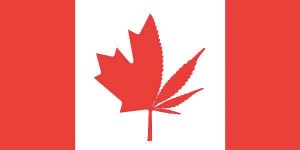

Marijuana Canadian FlagCanadians will go to the polls this October and make a stark choice between the conservatism of the past and the progressive tide sweeping the rest of the continent. If they tilt to the left, cannabis could soon be legal north of the border; if they lean right, drug-policy reform could stall.


That should matter to Americans. The faster Canada reforms, the faster reform is likely to happen here, too. And a Canadian holdout could slow change in U.S. states with tentative voters.


Marijuana is just one issue at play in this year’s election, and a relatively small one at that. But the race is expected to be close, and even a minor issue could make the difference.


Technically, Canadians don’t elect their national leaders. Instead, they vote for members of Parliament. The party with the most seats gets to appoint the heads of government departments, including the prime minister. These appointments typically go to party leaders.


Conservatives in power since 2006


The Conservative Party currently controls the government and has since 2006. Conservative Prime Minister Stephen Harper is still relatively popular, but his party is trailing the neophyte New Democrats in the polls. This left-leaning party has never held a majority in Parliament before.


It’s not clear they can pull that off this year, either. But if they can manage to out-poll the Conservatives, even without a majority, they could form a coalition government with the Liberal Party.


Until Harper’s rise in 2006, the Liberals dominated Canadian national politics for decades. But their elitist image and muddled politics have hurt them with voters. They could still have a powerful voice, but they’re unlikely to run the government alone again.


Longest Canadian election campaign in history


Marijuana Pipe and JointsAt 11 weeks, this will be the longest federal campaign season in Canadian history. Elections there are limited by law, unlike the United States, where presidential contests can exceed 18 months.


The “long” season should give Canadians plenty of time to talk about cannabis. The nation’s medical marijuana program is widely popular, and support for recreational legalization is growing, but it’s unclear which way voters are likely to go in October.


Current odds suggest the New Democrats and the Conservatives could tie in terms of seats in Parliament, but no party stands to win an outright majority. In that case, either the New Democrats or the Conservatives could form a weak minority government, or the two left-wing parties could team up and form a coalition government.


That may be the most likely outcome. It would mean a sharp change on a long list of political issues, including pending international trade pacts and the Keystone Pipeline project. It could also offer the best hope for legalization, since both the Liberals and the New Democrats support the idea. The Conservatives oppose all reform, including medical marijuana.


Why the Canadian Elections Matter

Head of DEA: MJ Is Safer Than Heroin

It might not seem like much, but as far as the DEA goes, it’s a landmark.


DEA Chief Chuck RosenbergThe agency’s new chief, appointed this summer to replace his scandal-plagued predecessor, said in early August that marijuana is safer than heroin. Obvious as that fact is to the rest of the world, in the anti-drug community it’s a major admission.


Chuck Rosenberg was appointed to replace Michelle Leonhart. She resigned from the DEA after trying to cover up a scandal involving narcotics agents, Colombian drug traffickers, and prostitutes. Leonhart was a staunch, long-time opponent of any degree of reform in marijuana law.


Leonhart prioritized cannabis highly


Indeed, Leonhart made cannabis the agency’s top priority, ahead of much more dangerous drugs such as heroin and cocaine. Her departure was seen as a chance for the Obama administration to enforce its evolving views on legal marijuana.


Though not a supporter of full legalization, President Barack Obama has directed his administration to lay off medical cannabis in states where it’s legal. That declaration was followed by new laws, approved by Congress, that protect MMJ patients and providers across the country.


Rosenberg hasn’t staked a solid position on prohibition and reform one way or the other. But his remarks hint that change is coming, even at the top of the nation’s most notorious narc squad.


Rosenberg said he still believes marijuana is “harmful and dangerous” but conceded that “heroin is clearly more dangerous than marijuana.” It was the first time any high-ranking official at the DEA had acknowledged the well-established fact.


The comments were meant to clarify an earlier statement by Rosenberg that cannabis is “probably not” as dangerous as heroin. Officially, the DEA still takes the position that marijuana is as hazardous as LSD, ecstasy, and powerful opiate drugs. That approach could eventually change, if Rosenberg’s comments are any hint.


Cannabis “schedule 1″ drug under CSA


Cannabis is currently categorized as a so-called “schedule 1″ drug under the Controlled Substances Act of 1970. That means the government considers it medically useless, highly dangerous, and highly addictive. Congress, the DEA, and the White House have traditionally refused even to entertain the possibility of rescheduling.


That is no longer true. Lawmakers are already pushing legislation that would reschedule marijuana under the CSA, making it more widely available as a medicine. Rescheduling could also pave the way for full legalization at the federal level.


Early efforts at rescheduling are tentative at best and would merely create a more lenient subcategory for cannabis under schedule 1. Even a move to schedule 2 or 3 would leave marijuana highly restricted. But it would mark a big step forward.


Rosenberg not planning legal reform


cannabisRosenberg said he doesn’t plan any major legal reforms in the short term and would continue enforcing existing federal laws. But he said the DEA’s focus would shift to “the biggest and most important cases there are.” That means bureau chiefs should target “the most important cases in their jurisdictions,” he said.


That, he said, means “heroin, opioids, meth and cocaine, in roughly that order, and marijuana tends to come in at the back of the pack.”


Pro-marijuana groups praised the comments but said they wouldn’t come as a surprise to much of anyone.


“It’s sort of remarkable that a DEA chief simply saying heroin is more dangerous than marijuana could actually make news,” said Ethan Nadelmann, executive director of the Drug Policy Alliance. “I guess that’s a reflection of how out of touch his predecessor was, that she couldn’t bring herself to simply state the obvious.”


Head of DEA: MJ Is Safer Than Heroin

Melinda Haag, Anti-MJ Prosecutor, Quits

The movement to end marijuana prohibition scored another big win this summer, as a major anti-cannabis prosecutor left her job in California.


U.S. Attorney Melinda HaagMelinda Haag, the U.S. attorney for the region that includes the San Francisco Bay Area, announced in late July that she would leave her job effective Sept. 1. Haag told her staff she plans to spend more time with her family, but otherwise gave no public reason for her departure.

It probably had something to do with her staunch position on medical marijuana. Haag is responsible for a long string of raids and prosecutions designed to end MMJ in a large swath of California. She is widely considered one of the most aggressive federal officials who opposes reform.


Haag defiantly refused president’s order


Haag repeatedly refused to back down from her crusade, even under orders from President Barack Obama and Congress. She essentially went rogue for several months, refusing to end her campaign to shutter the nation’s largest cannabis dispensary, the Harborside Health Center of Oakland.


Her obstinance flew in the face of guidelines issued by the Obama administration that instructed prosecutors to go easy on medical marijuana in places where it’s legal under state law. It also ignored laws passed by Congress that were designed to protect MMJ patients and providers.


With the backing of the Department of Justice, Haag simply argued that the directives didn’t apply to her or to her anti-cannabis prosecutions. Lawmakers and reformers blasted that position, saying Haag was willfully breaking the law.


Reason for Haag’s resignation unknown


MarijuanaNo one in the administration provided a reason for Haag’s resignation, but it comes in the wake of other marijuana-related shakeups by the White House. Michelle Leonhart, the former head of the DEA, left that agency earlier this year in the wake of a scandal involving drug traffickers, prostitutes, and DEA agents.


Among other tactics, Haag made liberal use of civil forfeiture laws, which allow police to seize money and other property from innocent civilians, and then never give it back. She also routinely threatened landlords with prosecution if they agreed to rent office space to legal dispensaries. Haag’s strategies led many to object that she was brazenly violating the Bill of Rights.


Medical marijuana has been legal in California since 1996, but the drug remains illegal for any use under federal drug statutes. Haag used that discrepancy to try to turn back the clock and end MMJ across the state.


Haag made many enemies


Obama appointed Haag U.S. attorney in 2010, after she served as head of her office’s white collar division. She rapidly built a reputation as a hard-core enforcer of anti-marijuana laws. She also quickly made a long list of dedicated enemies – foes who are likely at least partly responsible for her demise.


Obama has yet to announce a replacement for Haag, but recent events suggest he probably won’t pick another hardliner as he prepares to leave office. His appointment to replace Leonhart at the DEA has already taken a softer stance on cannabis, acknowledging in recent weeks that it’s safer than heroin.


Melinda Haag, Anti-MJ Prosecutor, Quits

Thursday, August 6, 2015

PTSD Excluded from Colorado"s MMJ List

Post-traumatic stress disorder, a severe mental illness triggered by traumatic experiences, will not make its way onto the list of conditions approved for medical marijuana in Colorado.


Veteran with PTSDThe state’s Board of Health voted 6-2 in July to keep PTSD off the list of conditions that patients may treat with cannabis. That list, which includes cancer, HIV/AIDS, and epilepsy, is currently limited to just eight disorders.


Had the vote gone the other way, it would have marked the first time Colorado has added a disease to the list since it was first created in 2000. This was the third failed attempt to include PTSD.


The board’s decision followed hours of public debate, including testimony from veterans, scientists, and PTSD patients. Board members pointed to a lack of science on the subject of cannabis and PTSD. Recent studies suggest the drug is helpful, but data remains scarce.


Veterans could benefit substantially


Veterans and cannabis advocates said they were disappointed by the vote. The science is strong enough to support a vote to include PTSD, they said.


“We’ve let down our veterans today, and [board members] should be ashamed,” said Sean Azzariti, an Iraq veteran and marijuana activist. “I really believed that this year it would pass, especially since it only failed by one vote last year. It’s truly a sad day in Colorado.”


The ruling won’t stop PTSD patients from getting marijuana legally. The drug is allowed for any use in Colorado, so patients over 21 can buy it from retail stores.


Younger patients with PTSD, on the other hand, will not be able to get their medicine legally. Minors are only allowed to use cannabis within a tightly regulated MMJ program for children.


What’s more, recreational marijuana is typically much more expensive than medicinal product. Retail shops must charge a stiff sales tax, while medical dispensaries can sell for little more than cost.


PTSD sufferers must abide by recreational limits and pay high-tax prices


Marijuana Pipe and JointsThere are also tighter limits on how much cannabis a user may possess. Recreational tokers are limited to one ounce, while MMJ patients may possess substantially more.


Nine states already sanction the use of cannabis to treat PTSD. Including the disease is a controversial decision, in part because it is not well-understood.


Once known as “shell shock,” PTSD has been recognized in military veterans for hundreds of years. But only recently has it developed into a solid psychiatric diagnosis.


PTSD is one of several trauma-oriented disorders, and symptoms include chronic anxiety, nightmares, flashbacks, and intense irritability. Cannabis may be useful in treating some of those symptoms.


The drug is known to curb anxiety in many patients. It can also be an effective relief for sleeplessness, and its memory-inhibiting properties could reduce distressing flashbacks.


“The most common symptoms that vets turn to conventional meds for are sleep problems; nightmares; . . . intrusive memories; . . . chronic anxiety, including social situations and other places; irritability; depressed mood; and pain,” said Dr. Deborah Gilmarn, who formerly worked at the Veterans Administration. “Pain can be related to combat wounds or not. In my opinion, all of them could be benefited to some degree by various properties in marijuana. Marijuana is useful for pain as well as for psychiatric problems.”


Advocates for inclusion said they were surprised by the vote. Colorado’s chief medical examiner, Dr. Larry Walk, had recommended the change.


Walk initially opposed the idea but changed his mind when he realized it was easy for patients to get medical marijuana for chronic pain instead of PTSD. Vets already had practical access to the drug, even if they had to lie to get it.


“We don’t want people to suffer as a result of not being able to access [medical marijuana] honestly,” Walk said when he announced his support.


PTSD Excluded from Colorado"s MMJ List

Friday, July 31, 2015

Friendly Skies Even Friendlier in Oregon

Talk about traveling in style: Passengers flying within the State of Oregon may now carry small amounts of marijuana with them.


Portland International Airport AirplaneOfficials at Portland International Airport announced in July that they would allow travelers to carry up to 1 ounce of cannabis when flying to another airport in Oregon. It is currently legal statewide to carry up to 1 ounce in public.

Even so, the airport was under no legal obligation to allow passengers carrying cannabis. Airports are typically municipal property subject to special security rules.


In Colorado, for example, marijuana is banned at all public airports. That means only passengers leaving private airports may carry the drug, and then only on flights that don’t cross state lines.


The new rule in Portland took effect toward the end of July. The city’s airport is the largest in the state and one of the busiest on the West Coast.


Marijuana cannot cross state lines


It remains illegal to attempt to fly with marijuana on any flight leaving Oregon. The drug is legal in Washington State, Colorado, Alaska, and Washington, D.C., but it is banned by federal laws, and transport across state lines is treated as criminal trafficking.


“For those flying to other cities in the state of Oregon, traveling with marijuana is allowable as long as that passenger meets all the other legal requirements of the state law,” said Steve Johnson, spokesman for Port of Portland, which owns and runs the airport.


Passengers traveling from Portland are free to carry cannabis through security checkpoints if they’re booked on in-state flights, Johnson said. If the cannabis is spotted by TSA agents, they will check boarding passes to ensure the drug won’t leave Oregon, and they will make sure passengers don’t try to carry more than 1 ounce.


It’s usually quite easy to walk through security carrying small amounts of marijuana, since the TSA is focused on explosives and other terrorist threats, not drugs. That said, getting caught with marijuana at an airport where it is prohibited can lead to arrest by local police.


Fully legal states have varying policies


Marijuana JointAirports in Colorado already offer so-called “amnesty boxes” where travelers can legally dispose of cannabis before passing through security. Marijuana is effectively banned on all commercial flights originating in that state.


Washington State, by comparison, allows cannabis to leave at least one facility, Seattle-Tacoma International Airport, as long as it is within the state’s legal limits.


Alaska has yet to decide whether to allow traveling with marijuana. Given the state’s sheer size and its sparse population, barring the drug on in-state flights could make it harder to get.


Alaska remains undecided


“It would premature for the airport to put forth any policies or procedures until we know what rules we’re supposed to be talking about,” said John Parrot, manager of Ted Stevens Anchorage International Airport in Alaska.


Passengers in Oregon will have to dispose of their marijuana before flying out of state. Those who bring too much to the airport must throw away anything beyond the 1 ounce limit. Travelers caught at security with too much marijuana could face both state and federal charges.


Oregon voters legalized cannabis in the November 2014 elections, as did Alaska and the District of Columbia. Washington State and Colorado legalized in 2012, the first states to do so.


Though the announcement is good news for Oregonians, Coloradans and others will likely have to live with current policies, at least in the foreseeable future.


“We don’t have any plans to reevaluate our marijuana policy,” said Laura Cole, spokeswoman for Denver International Airport.


Friendly Skies Even Friendlier in Oregon

Attitudes Toward MJ Improving Among Youths

Marijuana reform hasn’t led more young people to use the drug, but it has had a dramatic effect on their attitudes toward it.


Youth Buying Marijuana School BusA new study, published in The American Journal of Drug and Alcohol Abuse in July, measured cannabis use among teens and young adults, comparing data from 2002 and 2013.


The study found that just 23 percent of youths ages 18 to 25 disapproved of marijuana use in the most recent survey – compared to 41 percent in 2002. At the same time, actual cannabis use increased by only 2 percent.


The study collected information about drug use from more than 400,000 youngsters. Roughly 100,000 of those were between ages 12 and 14, while another 100,000 were aged 15 to 17 and the remaining 200,000 fell into the 18- to 25-year-old category.


Marijuana use among youths holds steady


“What explains this?” asked Christopher Salas-Wright, an assistant professor at the University of Texas and the study’s lead author. “It is hard to know. The rise of medical marijuana, the relaxing of marijuana use laws, and increased exposure of marijuana as perhaps normative, as well as no longer immoral, may be influencing how young adults feel about others using marijuana, but not impacting beliefs about one’s own use of marijuana.”


That discovery is only good news for cannabis users and reform advocates. It means dire warnings about exploding teenage marijuana use have not come to pass, and it also means young people are making smart distinctions between the drug’s safety and its appropriateness in their lives.


Zachary Pion, a recent graduate of the University of Vermont, said he saw plenty of evidence that marijuana’s image has improved.


“I would say I’ve always had a strong opposition to marijuana usage, but seeing it so freely in my college experience, I became far less sensitized to its usage very quickly, even though it did not impact my own decision to not use the substance,” Pion said.


Changing perceptions of marijuana


Marijuana JointAmong other realities, changing perceptions toward marijuana will almost certainly translate to further reform down the road. Cannabis is now legal for any use in four states and the District of Columbia; with young voters on board, that number is only likely to grow.

Only adults are allowed to use marijuana in any of these places. Minors under age 21 can only consume it if they have legitimate medical clearance, and then it must usually be a non-intoxicating form of the drug.


Still, it remains relatively easy even for young teenagers to get their hands on cannabis. Advocates say legalization will make it harder, but Salas Wright said he wanted to explore other avenues for preventing underage use. He also wondered how legalization has affected attitudes toward marijuana use.


“Our results may suggest that recent changes in public policy, including the decriminalization, medicalization and legalization of marijuana in cities and states across the country, have not resulted in more use or greater approval of marijuana use among younger adolescents,” he said.


Attitudes Toward MJ Improving Among Youths

Wednesday, July 22, 2015

Obama Commutes Drug Sentences

President Barack Obama has shortened the sentences of dozens of non-violent drug offenders, the latest step in a growing movement to reform the criminal justice system.


President Barack ObamaObama signed commutation orders for 46 federal inmates, all serving long sentences for non-violent crimes involving marijuana and other drugs. The president noted that the most of the inmates would already be free if they had been sentenced under current law.
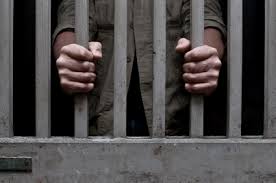

Their long prison terms, including at least one life sentence, resulted from mandatory minimum sentencing laws enacted during the so-called War on Drugs. Critics now contend those laws are overly harsh and disproportionately punish black men.


“I am granting your application because you have demonstrated the potential to turn your life around,” Obama said in a letter to each of the prisoners. “Now it is up to you to make the most of this opportunity. It will not be easy, and you will confront many who doubt people with criminal records can change. Perhaps even you are unsure of how you will adjust to your new circumstances. But remember that you have the capacity to make good choices.”


Obama first president to visit federal prison


Obama’s ruling came in late July, just days before he was scheduled to become the first sitting president to visit a federal prison. Neil Eggleston, counsel to the president, said the commutations were meant to address a disconnect between punishment and crime.


“Federal sentencing practices can, in too many instances, lead non-violent drug offenders to spend decades, if not life, in prison,” Eggleston wrote on a White House blog. “Now, don’t get me wrong, many people are justly punished for causing harm and perpetuating violence in our communities. But, in some cases, the punishment required by law far exceeded the offense. These unduly harsh sentences are one of the reasons the President is committed to using all the tools at his disposal to remedy unfairness in our criminal justice system.”


Obama’s signature dramatically increased the number of pardons and commutations he has granted, from 44 to 90. Even that is a relatively small number.


Mass amnesty may be necessary


Marijuana PrisonMarijuana advocates believe mass amnesty may eventually be necessary, once cannabis is widely legal. Thousands of small-time drug offenders remain languishing in prison, typically without ever throwing a punch or drawing a gun.


The president’s decision means all 46 men and women will soon leave prison. But they will continue to carry criminal records, as Obama chose not to pardon them.


The president is the only person in the government with the unquestioned power to pardon federal inmates or commute their sentences. A commutation simply shortens or ends a prisoner’s sentence without overturning the underlying conviction.


Mass amnesty, should it ever happen, could free hundreds if not thousands of low-level drug offenders in federal prison. The last time such a grant occurred, it removed the threat of criminal penalties from thousands of young men who dodged the draft during the Vietnam War.


Obama Commutes Drug Sentences