Monday, July 13, 2015

App Makes Medical Marijuana Easy

Marijuana is just a few inches from legal in California, where the drug is cheap and widely available on medical grounds, even to adults without serious health conditions.
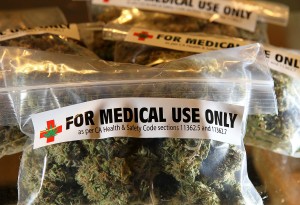

medical marijuanaBut bureaucracy still stands in the way. Even in the Golden State, where the rules on medical cannabis are so loose tourists can get it, patients must have a doctor’s recommendation. If they want official legal protection, they must also register with the state and get an ID card.


That process could become significantly easier, though, thanks to a new app, EazeMD, that lets users seek out doctors online, apply for recommendations over the phone, and even order marijuana for delivery. What was once a multi-step process could soon move much more smoothly.


EazeMD streamlines the MMJ process


Presently, California medical marijuana patients must obtain a physician’s recommendation in person – not because the law requires it but because it’s the easiest way to get a quick exam and a recommendation. With EazeMD, however, the exam takes place by phone, patients are issued e-cards in advance of their hard IDs, and there are options for delivery within 15 minutes.


“You need to actually send a driver to deliver consumer goods, but there’s no reason you should have to actually dispatch a doctor,” said EazeMD founder Keith McCarty. “It really just streamlines the process.”


California voters legalized medical cannabis in 1996, making it the first state to do so. Under the original law, there were few hard-and-fast rules about possession, cultivation, or sale, so local communities were left to impose regulations of their own.


Industry regulations were lacking
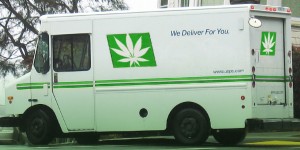

deliveryA follow-up law, passed by the state Legislature a few years later, enacted new statewide rules but still left the industry mostly to its own devices. In the decades since, critics of marijuana reform have pointed to the relative chaos of California’s MMJ system, saying it’s too easy for non-patients to get their hands on cannabis.


Even so, the process for registering as a patient can be cumbersome and expensive. Currently patients have to spend roughly $100 to secure a doctor’s recommendation, plus the cost of medicine. For poor patients, that expense can be insurmountable.


EazeMD aims to reduce the cost of registration, even as it increases convenience. It isn’t the first cannabis delivery app on the market – Meadow, for one, got there first. But it is unique in that it offers a comprehensive approach to finding a physician, sitting an exam, applying for a card, and buying marijuana.


Critics will likely complain that services like EazeMD make it easier for non-patients to scam the system. But California state law explicitly allows medical treatment by phone, according to telehealth guidelines issued by the Medical Board of California: “There are no legal prohibitions to using technology in the practice of medicine, as long as the practice is done by a California licensed physician.”


“Telehealth is accepted across 28 states and 23 states [that] have made marijuana for medical reasons legal,” McCarty said. “It’s accepted across the California Medical Board.”


App Makes Medical Marijuana Easy

Friday, July 10, 2015

Louisiana OKs Limited Medical Marijuana

Louisiana is now the first state in the Deep South to allow full medical marijuana – at least on paper.


Louisiana MarijuanaRepublican Gov. Bobby Jindal, who is running for president, signed legislation in late June that eases penalties on cannabis possession. It also revives the state’s decades-old MMJ program, which never got off the ground.

Sadly, the new medicinal cannabis law may not take effect for a while. The state plans to impose some of the toughest regulations in the country, if not the toughest, and it could be a long time before they hash out the rules, license providers, and make the drug available to patients.


SB 143, which started in the state Senate before passing the House and winning Jindal’s signature, makes Louisiana unique as a Southern state that has adopted “whole plant” medical marijuana. This approach allows patient to use any part of the plant as treatment, including the intoxicating chemical THC.


12 states allow limited CBD oil


More than a dozen states, mostly in the South, permit only a non-intoxicating form of cannabis known as CBD oil, and then only for patients with severe seizure disorders. Whole plant MMJ applies to a much wider range of patients and health conditions.


39 states now allow some form of medical cannabis. Fifteen of them have adopted CBD-only laws, including Texas and Oklahoma, which legalized the substance earlier this year. The other states allow whole plant medication, including the four that also have legal recreational marijuana: Colorado, Oregon, Alaska, and Washington.


Louisiana had medical marijuana law since 90s


Louisiana has had a medical marijuana law on its books for many years. The program was designed during the early 1990s, when the idea of MMJ was first gaining legs. But it never stood much chance of success, as officials made it impossible to register or buy medicine. For that reason, the system was never officially counted as real MMJ.


Medical MarijuanaJindal signed another bill in late June, this one loosening criminal penalties on marijuana offenders, especially those with only small-time offenses on their records. Cannabis remains strictly illegal in the state, and the changes won’t decriminalize or legalize the drug in any way.

Florida was the first Southern state to make a realistic attempt at passing medical marijuana. That effort failed because it didn’t reach the 60 percent public vote required, but it did surpass 50 percent, suggesting success is likely in the future.


It’s somewhat ironic that Louisiana beat Florida to the punch, at least in theory. Floridians will likely have practical access to MMJ much sooner than Louisianans, even with the head start. Still, the new laws out of Baton Rouge will open the door to future cannabis sales.


Louisiana OKs Limited Medical Marijuana

Delaware Decriminalizes

Delaware has joined a growing list of states where marijuana possession is no longer a crime.


Delaware Marijuana SignThe state Senate voted in June to approve legislation that will decriminalize possession of up to one ounce of cannabis. Rather than facing jail time or probation, offenders will pay a simple $100 civil fine.

Gov. Jack Markell signed the bill almost as soon as it reached his desk. It was sponsored by state Rep. Helene Keeley, a Democrat, and will take effect in six months.


Previously, it was a misdemeanor to possess any amount of marijuana for personal use, and the maximum sentence was six months in jail and $1,150 in fines. Those penalties will remain until the new law takes effect.


Citation will be maximum penalty for simple possession


Police will still be able to confiscate illicit marijuana, but will no longer be able to make arrests or institute any penalty beyond a citation. Currently 14 other states have similar decriminalization statutes, while another four have legalized the drug completely.


Some lawmakers wanted to amend the legislation so it would cover possession of only half as much marijuana, but that effort failed on the Senate floor. Republicans and police groups fiercely opposed the law but were unable to stop it. The bill passed along strict party lines, with no Republicans voting for it.


It is still a felony in Delaware to sell cannabis or otherwise distribute it. Possession of larger amounts, greater than 5 pounds, is treated as trafficking and is subject to enhanced prison terms.


Addressing racial disparities in arrest rates


Marijuana LeavesLawmakers pushed the bill as a solution to the disparate arrest rates of black and white cannabis users. Both races use the drug at the same rate, but blacks are arrested far more often than white users.


“The governor remains committed to reducing the number of people entering the criminal justice system and refocusing resources where they are needed most, and House Bill 39 supports these efforts,” said Kelly Bachman, Markell’s spokeswoman.


A landmark study by the ACLU, which examined racial disparities in arrest rates nationwide, found that Delaware has a particularly bad problem. Black tokers are about three times as likely as white tokers to be arrested for simple possession. They’re also more likely to do time behind bars.


Marijuana advocates, local and national, praised the new law and said it would make Delaware safer and healthier.


“Marijuana is an objectively less harmful substance than alcohol, and most Americans now agree it should be treated that way. Delaware has taken an important step toward adopting a more sensible marijuana policy,” said Robert Capecchi of the Marijuana Policy Project.


But opponents of cannabis reform said the vote will ultimately backfire. State Sen. Colin Bonini, a Republican, joined the rest of his party in voting against the bill.


“This is a vote we’re going to really, really regret,” Bonini said. “Would you want your kid smoking weed? I think the answer is overwhelmingly no.”


Though full legalization isn’t likely in Delaware anytime soon, the state’s lawmakers were clearly looking to the future on the East Coast. Legal marijuana is likely to reach Maine, Massachusetts, and possibly Rhode Island within a matter of a few years.


Delaware Decriminalizes

Wednesday, July 8, 2015

Marijuana Rising, Cocaine Falling: U.N.

Marijuana is on the rise, and it’s getting stronger. But cocaine is on the decline.


DrugsThose are the conclusions of a report issued in June by the United Nations. The study, which compared cannabis use statistics with previous years, found that demand for the drug has increased, especially in the United States.

Four U.S. states have legalized marijuana for any adult use, while another 33 states have adopted some form of medical cannabis law. Legalization is expected to continue its spread, making the United States a leader in reform.


Global illicit substance use remains steady


Overall, the World Drugs Report from the U.N.’s Office on Drugs and Crime found that use of illicit substances has remained stable around the globe. But there have been dramatic spikes and drops for certain drugs in certain places.


In Afghanistan, for example, opium is a leading commodity and is widely available. While most of this product is shipped around the world, some makes its way into local Afghan communities, and the problem is getting worse.


“It is estimated that almost a quarter billion people between the ages of 15 and 64 years used an illicit drug in 2013,” according to the report.


Marijuana remains illegal in most parts of the world. It is fully legal by statute only in Uruguay, but it is decriminalized and widely tolerated in a handful of other countries, most in Europe.


Cocaine production has fallen


The best news from the U.N. shows cocaine production has dropped substantially, especially in South America, where the coca plant is native and widely grown.


Global cocaine production dropped 10 percent between 2012 and 2013, the report found. Police seizures of the drug dropped by 9 percent between 2008 and 2013.


Cannabis, on the other hand, is booming almost everywhere. The U.N. credits this not only to increasing reform but also to “rapid advancement in cannabis plant cultivation techniques.”


Marijuana cultivation driving agricultural revolution


TMarijuana Leaveshose developments are having an impact not only on marijuana cultivation but on agriculture generally. Techniques used to grow high-quality cannabis could ultimately revolutionize farming.


As a result of those changes, marijuana is growing ever more potent, according to the study. The average THC concentration in cannabis increased from 3.4 percent in 1993 to 8.8 percent in 2008.


Of course, marijuana users have long had access to a much more potent product. Award-winning strains today can reach 30 percent THC, but they are merely genetic descendants of high-potency strains once popular in the 20th century.


What’s more, there is no evidence that greater potency has led to increased public health concerns, aside from a possible but negligible uptick in addiction rates.


The rapid change in the drug-trafficking landscape – legalization, decriminalization, medical marijuana, reduced cocaine production – have all hit cartels hard. the report said. Mexican drug lords have increasingly turned to heroin, driving a surge in opiate addictions, because their other options are dwindling.


“They will lose a lot of money because of law enforcement,” said Carl Meacham of the Center for Strategic and International Studies in Washington, D.C. “But it is still lucrative enough for them to do this business.”


Marijuana Rising, Cocaine Falling: U.N.

Tuesday, July 7, 2015

What Do Current Events Say About MJ Reform?

Not everyone who supports the legalization of marijuana also supports gay marriage – just like not everyone who supports gay marriage also backs criminal justice reform.


Marijuana Joint American FlagBut these issues are far from mutually exclusive. They ride on similar currents of popular opinion, and if recent days are any indication, their time has come.

Don’t be surprised to wake up 10 years from today and find that cannabis is legal from coast to coast, or at least close enough that you could easily drive across state lines and smoke it there. Change is coming, and it will only accelarate as time passes.


On June 26 the U.S. Supreme Court issued a landmark decision enshrining the right of gay couples to marry. The day before, a similarly sweeping ruling upheld President Barack Obama’s signature legislative accomplishment, the Affordable Care Act.


At the same time, a mass shooting in Charleston, S.C., drove political leaders across the country, left and right, to immediately and permanently pull the Confederate flag from its many official perches.


Meanwhile, a growing coalition of lawmakers on both sides of the aisle is pushing a once-in-a-generation movement to overhaul the nation’s criminal justice system – to end mandatory minimum sentences, provide treatment and probation instead of incarceration, and address mental health issues in special courts instead of jails.


Such outcomes would have been unthinkable just a decade ago. But what does it all mean for marijuana?


Whatever your position on same-sex marriage, legal reforms, or Obamacare, take heart in the fact that cannabis laws will continue to change, too. There may be only a short window of time before the current pace of events slows, so it’s critical that advocates act now. And that’s exactly what they’re doing.


Marijuana is currently legal for medical use in 37 states, including 14 that allow only a non-intoxicating form of the drug known as CBD oil. Four states also allow the cultivation, sale, and use of cannabis for recreation: Oregon, Alaska, Colorado, and Washington State, as well as Washington, D.C.


Full legalization will likely be on the ballot in as many as 10 states next year, including California, the nation’s most populous state. Even if some of those initiatives die at the polls, others will surely pass.


Marijuana LeavesThere have already been setbacks. Maine lawmakers recently voted down a bill that would have legalized marijuana for personal use and created a regulated industry to grow and sell the drug.


Overall, though, the outlook for cannabis users is bright and getting brighter. It may yet take a long time to bring full reform to every corner of the country, but it is already spreading quickly, and the odds it will stop anytime soon are slim and getting slimmer.


What Do Current Events Say About MJ Reform?

Portland Cops Use Donut to Explain Carry Limits

Marijuana will soon be legal in Oregon, and cops there are having some fun with users as they prepare for the new law.


Portland Oregon Police Marijuana BrochurePolice in Portland, Ore., recently printed a brochure to help cannabis consumers follow the rules. Those rules will allow the possession of up to 8 ounces of marijuana at home and up to 1 ounce in public.


The brochure uses images of a local delicacy, the Voodoo donut, to explain the limits of the law. A chocolate donut with swirls sits next to a pile of cannabis in a series of photos, each with a larger pile.


One image shows a pile containing 1 ounce, roughly the same size as the donut, labeled “Legal on Person.” Another photo shows an 8 ounce pile next to the same donut, this time labeled “Legal in Household.” A final shot shows the donut with an even larger pile, 1 pound, labeled “Illegal.”


Oregon voters legalized recreational cannabis in the November 2014 elections, as did voters in Alaska and Washington, D.C. Marijuana was already legal for recreational use in Colorado and Washington State.


Oregon’s law is the most generous in terms of possession limits. Most other states draw the line at 1 ounce, either at home or in public. These laws also typically allow home cultivators to keep everything they grow, however, so the practical effects of Oregon’s rules are much the same.


Cannabis will officially go legal in July, though the first retail stores won’t open until 2016. In the meantime, it will be legal to buy and possess marijuana for both recreation and medicine. It’s also legal to grow up to four plants on private property. It is illegal to sell marijuana, however, since no retail licenses have yet been issued.


It is also a crime to grow larger amounts of cannabis. As they prepare for recreational legalization, lawmakers in Oregon have discussed capping the total number of medical marijuana plants at any given grow site to discourage massive “caregiver” grows that sometimes divert product to the black market. Lawmakers hope to stop the diversion on both the medical and recreational sides.


marijuana-trackingCops in Portland are taking a line from the playbooks of police in Denver and Seattle, who have also used humor to inform marijuana users about the law. In 2013 Seattle police officers handed out 1,000 bags of Doritos at a public celebration shortly after legalization took effect there.


The focus, as usual, is on the munchies, typically a source of hilarity. But the message is serious: Now that cannabis is legal, consumers are expected to follow the law in Oregon.


That means no toking in public and no driving while stoned. Public consumption carries a relatively minor civil fine, but stoned driving is a crime in Oregon – a felony, in some cases.


Portland Cops Use Donut to Explain Carry Limits

Rand Paul: The Best Candidate for Marijuana Reform?

Who’s the best presidential candidate when it comes to marijuana reform? Professional cannabis advocates say it’s Kentucky Sen. Rand Paul.


Kentucky Senator Rand PaulThe Marijuana Policy Project, the biggest national group campaigning for legalization, issued a voter guide in late June that rated candidates on their support for reform. Paul, a Republican, came in No. 1.

Paul has pushed two critical pro-cannabis bills through the Senate, both protecting the rights of medical marijuana patients across the United States. He has not openly endorsed legalization, but his libertarian state’s rights positions suggest he’s open to the idea.


How did they rank?


Paul received a grade of A- from the MPP. A handful of other candidates scored well, while others failed miserably.


Hillary Clinton, for example, got a B-. She has publicly backed medical marijuana and cannabis research, and she is pushing for criminal justice reforms, but she has a conservative record on the issue and hasn’t offered any support for full legalization.


Two other Democrats, former Virginia Sen. Jim Webb and former Rhode Island Sen. Lincoln Chafee, won B+ ratings. Webb has pushed for justice reform while Chafee signed a law in 2013 that decriminalized marijuana possession.


Former Vermont Sen. Bernie Sanders, also seeking the Democratic nomination, got a B. Sanders says he supports decriminalization and will keep his mind open to further reform. Martin O’Malley, former governor of Maryland and longshot Democratic candidate, was given a C- because he opposed medical marijuana while in office.


Vice President Joe Biden scored the lowest grade for the Democrats, a D. The MPP cited his work enacting mandatory minimum sentencing laws for cannabis offenders and creating the office of the White House drug czar.


Republican support was limited


Back on the crowded Republican side, Texas Gov. Rick Perry came in second to Paul, winning a B grade. Perry has thrown his weight behind a growing push for justice reform in his state.


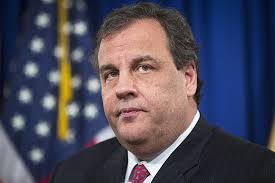
Chris ChristieOther GOP candidates fared much worse. Most – including Donald Trump, Ben Carson, Jeb Bush, John Kasich, Ted Cruz, Carly Fiorina, Lindsey Graham, Mike Huckabee, Bobby Jindal, George Pataki, Scott Walker, and Marco Rubio – managed Cs or Ds. But New Jersey Gov. Chris Christie and former Pennsylvania Sen. Rick Santorum each received F grades. Both men publicly oppose cannabis reform and have promised to roll back legalization.


“Some of these guys who tout states’ rights, fiscal responsibility, and getting the government out of people’s private lives want to use federal tax dollars to punish adults for using marijuana in states that have made it legal,” said MPP spokesman Mason Tvert. “They say using marijuana is immoral or just too dangerous to allow, but serve alcohol, a more dangerous substance, at their fundraisers. The hypocrisy is astonishing.”


Rand Paul: The Best Candidate for Marijuana Reform?