Police in California’s famed Emerald Triangle executed a series of raids in June that uprooted more than 15,000 marijuana plants.
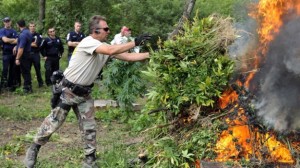 Sheriff’s deputies from three counties conducted the raids in late June, saying they found roughly 15,300 cannabis plants in varying stages of maturity, according to a local newspaper. Though not one of California’s largest marijuana busts, the operation destroyed a significant amount of cannabis.
Raids such as this have at most limited impact on the illicit marijuana market. The Emerald Triangle, which consists of Humboldt, Mendocino, and Trinity counties, is so saturated with illegal cannabis farms that it would take a massive military intervention to find them all.
The local police are trying, though. The investigation was announced June 24 and was expected to continue for several days.
The raid focused on several farms throughout the Emerald Triangle. The region, located along the Pacific Coast in mountainous Northern California, produces more marijuana than any other area in the United States. It grows most of the state’s cannabis, medical and otherwise, and supplies a large percentage of the nation’s black market.
Relaxed MMJ laws
Marijuana is legal only for medical use in California, though regulations are so loose it’s easy for non-patients to buy the drug on the medicinal market. Cannabis is decriminalized for recreation statewide, and full legalization is likely to arrive with the 2016 election, but police continue to target growers, sellers, and in some cases, patients.
The state adopted medical marijuana in 1996, the first place in the country to do so. Medical cannabis is now legal in 36 other states, while recreational sale, possession, and use are legal in four.
The Emerald Triangle, located about 200 miles north of the San Francisco Bay Area, has been a major source of cannabis since shortly after MMJ was adopted. The region is frequently targeted by local police, sheriff’s deputies, and federal anti-drug agents.
Police continue to raid grow sites
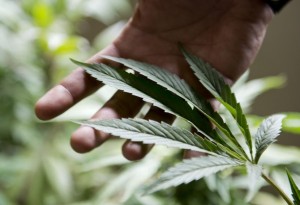 The raids continue despite new federal laws designed to protect patients, retailers, and growers from legal interference. Local and federal agencies have largely ignored the law, refusing to drop their efforts to stamp out marijuana completely.
Sheriff’s deputies who carried out the June raids said they found evidence of environmental damage at the grow sites. Farmers were also possibly stealing water by diverting it to their plants, according to the Mendocino County Sheriff’s Office.
Cannabis gardens have come under increasing scrutiny as critics say they use too much water and have worsened California’s epic drought. Marijuana plants require large amounts of water, though there is some debate over how much damage these farms are causing.
Officials have imposed the most drastic water restrictions in California history, aiming to cut use statewide by 25 percent. The rules affect legal cannabis growers but can be hard to enforce on illicit cultivators.
California Raid Nets Thousands of MJ Plants

 Organizers behind the event announced in June that they have
 Even though possession of cannabis is legal, public consumption of the drug remains a misdemeanor in Colorado. The Denver County Fair is considered a public event, so organizers were forced to prohibit any consumption at the booth.
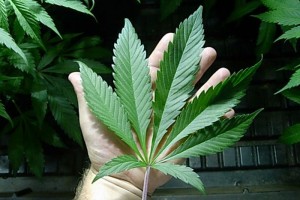 The state’s House of Representatives voted overwhelmingly in late June to defeat a bill that would have allowed
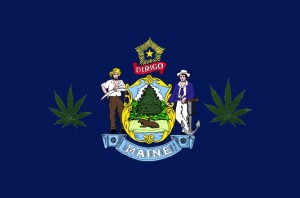 “Momentum for marijuana legalization has clearly begun to wane,” said Scott Gagnon, executive director of Smart Approaches to Marijuana, an anti-cannabis group. “We will take this momentum with us as we hit the road to continue to speak out about the public health and public safety threats posed by commercialized marijuana.”
 If the
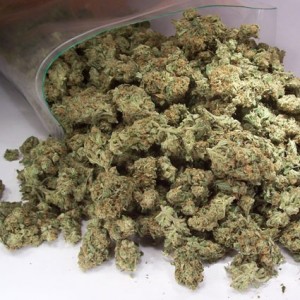 Nicholas Coilas, an executive who works in the marijuana industry, called dropping prices “a natural result for any maturing industry as dispensaries try to find the market’s equilibrium price.”
 That’s starting to change. In Colorado,
 “Hemp is currently a $620 million industry in the U.S.,” said Zev Paiss, executive director of the National Hemp Association. “Hemp can create tens of thousands of American jobs if businesses can grow, process and source their hemp in the U.S.”
 But new statistics show the DEA is losing that war, badly. Not only do many Americans toke – 33 million each year, more than 10 percent – but
 The DEA has done nothing to effectively stem this easy access. The agency’s focus on Mexican brick smugglers, for example, overlooks the fact that the market for locally grown cannabis has exploded in recent years. Brick is no longer appealing to anyone but teenagers, and they clearly don’t have much trouble finding even that.
 The executive committee of the Flandreau Santee Sioux Tribe voted to
 Local officials weren’t happy about the decision. Flandreau Mayor Mark Bonrud said his city would absorb the negative consequences of legal cannabis without any of the benefits.