New Jersey Gov. Chris Christie has famously promised to stamp out marijuana legalization if he’s elected president. But he may soon have a fight over cannabis closer to home.
 A state Senate panel held a hearing in November to discuss new legislation that would legalize marijuana for recreational use. New Jersey already allows medicinal cannabis, though Christie has tried to block that program in the past.
Lawmakers predicted a fight with the governor, who has taken a staunch anti-marijuana position during his beleaguered run for the GOP nomination. Christie, whose candidacy is likely headed for the dustbin, has promised to stop Colorado and other states from allowing legal cultivation, sale, and possession of the drug. It hasn’t done him much good on the campaign trail.
Bill to legalize and regulate marijuana
New Jersey Sen. Nicholas Scutari, a Democrat, introduced the bill that would legalize, regulate, and tax cannabis for adults over 21. His plan, he said, would kill the black market and create a new, legal, billion-dollar industry.
“I believe our state should lead the way,” Scutari said.
Christie’s predecessor, a Democrat, signed medical marijuana into law shortly before leaving office, and Christie tried repeatedly to kill the program. He has said he would never allow legalization in New Jersey while he’s governor and has threatened to use the White House to intervene in states that already allow legal cannabis.
“As a former federal prosecutor, I’ve been the most outspoken person in this race on this issue,” Christie said in a recent interview. “I am completely, 100 percent opposed to drug legalization. That’s different than being for treatment.”
Indeed, Christie has developed a reputation for compassion when it comes to addicts, and has repeatedly called for drug treatment rather than arrest and incarceration. A video of him speaking at a diner about his law school friend has gone viral; the friend died of a heroin overdose after a legal prescription for painkillers turned into a severe addiction.
Christie staunchly opposed to cannabis legalization
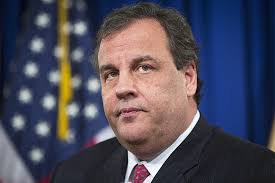 But his position is much less forgiving when it comes to legalizing cannabis. With the possible exception of Louisiana Gov. Bobby Jindal, who likewise stands no chance of winning the nomination, Christie has taken the hardest anti-marijuana position of any candidate.
The state Senate hearing, held Nov. 16, included testimony from several pro-legalization advocates and civil liberties experts. Udi Ofer, executive director of the New Jersey branch of the ACLU, pointed to the viral video of Christie’s diner speech, noting a disconnect between the governor’s words on addiction and his actions on cannabis law.
“Here we have a governor who talks about how the war on drugs has failed,” Ofer said. “Yet we have seen arrests increase over time. There’s an inconsistency there.”
New Jersey Lawmakers Talk Legalization

 The opinion was handed down on a 2-1 vote by the justices of the state’s Court of Appeals. It held against a man who was busted two years ago after police said they
  Carlton had won before a trial judge, who dismissed the charges, and that decision was upheld by an intermediary appellate court. But the Court of Appeals voted to reverse the dismissal, sending the case back for trial.
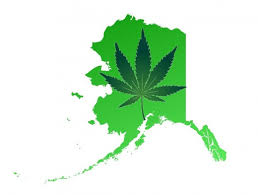 The state’s Marijuana Control Board voted 3-2 in November to
  Shops would still have to comply with bans on any kind of indoor smoking, so the designated areas would have to be outside – not a pleasant prospect in Alaska in the winter. Marijuana social clubs, which allow private members to bring their own cannabis, are still illegal, said board Director Cynthia Franklin.
 That word came from her people, who denied the hot rumor that the singer planned to open a first-of-its-kind
  It’s not a stretch to imagine Rihanna involved in the
  Linda Horan suffers from terminal cancer and could die at any time. Now her lawyer says he believes she is
  At least two dispensary owners from Maine signed affidavits for Twomey testifying that they would provide Horan with cannabis once she has a New Hampshire ID card. Twomey told the court Horan has invitations from several Maine residents, including a state lawmaker who helped pass medical cannabis six years ago.
 The raids took place Nov. 18 in Kent County, which includes Grand Rapids. Police there said the shops were operating illegally, as Michigan does not currently allow dispensaries.
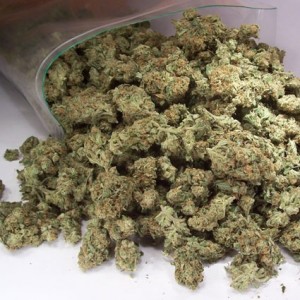 Patients may still grow their own marijuana, or they may pay caregivers to grow for them under limited circumstances. But they have no way to buy the drug on the retail market, and that means that patients without green thumbs and without access to caregivers must buy from the black market.
 Smoking while pregnant can result in birth defects, low birth weight, and even fatality: Babies born to mothers who smoke are at greater risk of sudden infant death syndrome. Drinking while pregnant causes fetal alcohol syndrome. And illegal drug use can lead to miscarriage, infant addiction, and fetal death.
 Why the fuss if there’s no evidence cannabis harms fetuses? More than anything, it’s probably an attempt by doctors, lawmakers, and regulators to mitigate the inevitability of marijuana reform.
 Gov. Chris Christie’s signature came after months of legal wrangling over Genny Barbour’s rights to medication. Hers was one of the first cases in the country to raise the question of whether students may use the drug on school campuses.
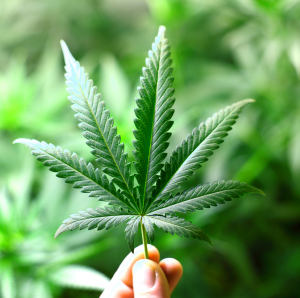 Following the law, Genny’s school, the Larc School of Bellmawr, adopted a new policy that lets her use her medication between classes. She must administer the drug with her mother’s help, since the policy bars school nurses from taking part. She is limited to non-intoxicating
  A Pittsburgh City Council member is pushing a new bill that would remove criminal penalties
  This is not a disease, exactly. Rather it’s a cluster of risk factors associated with obesity and poor health. They include high blood pressure, elevated blood sugar levels, excessive cholesterol, and belly fat. These factors substantially increase the risk of heart attacks, type 2 diabetes, and other serious health concerns.
 “Among emerging adults, current marijuana users were 54 percent less likely than never users to present with metabolic syndrome,” the researchers wrote. “These findings have important implications for the nation as
  A lot has changed in the meantime, including
  Crohn’s Disease
 One of the biggest dilemmas facing the world of
  A large majority, 81 percent, said they don’t worry that workers will show up to work high, even following legalization in four states and the District of Columbia. Intoxicating forms of the drug are allowed for medicinal use in those states plus another 22, while
 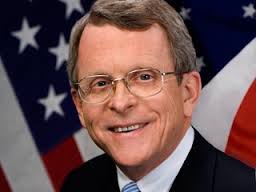 Don’t believe it. Ohio is likely to legalize cannabis, whether for medicine or for recreation, at some point in the near future. Even the state’s Republican attorney general, who opposed the legalization initiative,
  DeWine pointed to a series of clinical studies, in and outside of Ohio, as a sign
  Leaders of the Flandreau Sioux Tribe said in November that they were
  Clinton’s remarks came at a rally in South Carolina Nov. 7. Her chief competitor for the nomination, Vermont Sen. Bernie Sanders, has already gone on record calling for rescheduling and has authored legislation to make it happen.
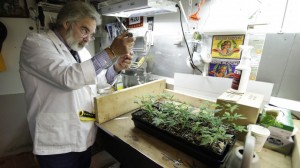 Despite her opposition to legal cannabis, Clinton has said she sees decriminalization as a key part of criminal justice reform. Politicians on both sides of the aisle have joined forces in an effort to end harsh sentencing laws and free inmates serving time for non-violent drug crimes.
 The survey, part of the DEA’s “2015 National Drug Threat Assessment Summary,” asked more than 1,000 law enforcement agencies what their officers view as the biggest threats.
 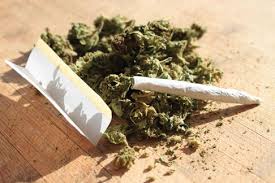 The poll, which surveyed state and local police, found that they don’t believe cannabis is a significant factor behind crime trends. Six percent said the drug was the biggest driver of violent crime in 2015, while 5 percent said the same of property crime. Many top law enforcement officials insist marijuana really does drive up crime rates, but the study contradicts those statements.
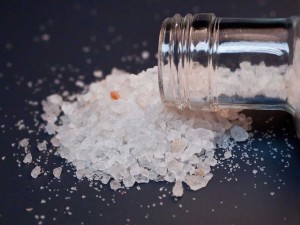 Drug-related hysteria comes and goes, so it’s not clear yet
  Horror stories about flakka use are growing. In one case, an intoxicated man tried to break down the door of a Florida police station because he believed he was being chased by a deranged motorist; he was caught on camera, alone.
 GOP businesswoman Carly Fiorina, whose fortunes have see-sawed since the first Republican debate earlier this year, scored only a B, despite taking a firm stance against legal cannabis. Sabet and Kennedy docked her because she has acknowledged that marijuana might have medicinal value.
 One of the nation’s largest pro-marijuana groups, the Marijuana Policy Project, is playing off that fact in a campaign to convince voters
  But times are changing. Young voters in particular no longer see anything to fear in marijuana.
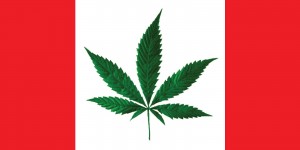
  Each of our neighbors, to the north and to the south, is looking at possible legalization within a matter of months or a few years. But which is going to get there first, Canada or Mexico? And could the United States beat them to the punch?
 The motives for reform in Mexico are obvious. The country and its people have suffered more than any other from the violent side effects of the illegal drug trade.
 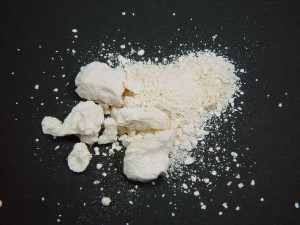 Even so, the government has long taken a much more punitive approach to people who use crack than it does to people who use cocaine hydrochloride, the powdered form of the drug. At least one presidential candidate has promised to end that disparity, a lingering holdover of 1990s anti-drug laws.
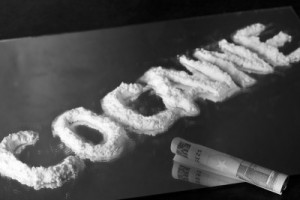 Cocaine hydrochloride, on the other hand, is made by processing base further, turning it into a fine white powder that is usually snorted. Both forms of cocaine produce a powerful high, though crack is known to be stronger. In each case, intoxication fades rapidly, leading to a cycle of repeated use that can end in addiction.
 That’s probably in part because “the longest campaign season” translated to just 78 days, almost nothing by the standard of America’s two-year election process. But it’s also because the United States tends to view politics north of the border as unimportant.
 The strong Liberal showing means